


FYI ·
Amethyst: The Legendary February Birthstone
Amethyst has been adorned for hundreds of years, but it wasn't always worn for looks. The word amethyst originates from the Greek word "amethustos," which can be translated to "sober," or "not intoxicated." The ancient Greeks believed that amethyst would ward off Bacchus, the god of wine and drunkenness, so they often carved the stone into cups that served wine and other intoxicating drinks. In medieval Europe, soldiers would sometimes wear amethyst amulets into battle, with the intentions of it healing them if they were wounded, and to keep them level-headed. In the later times of Egyptian pharaohs and royalty, amethyst intaglios were worn to symbolize the highest of power.
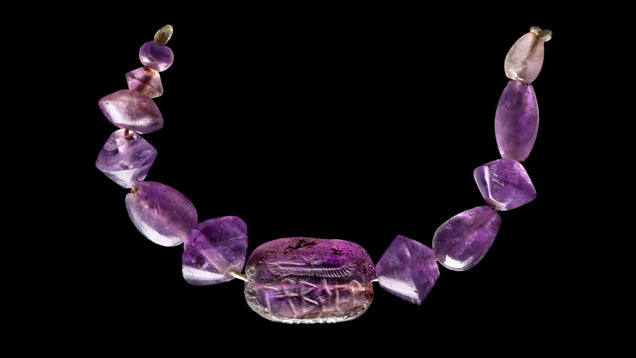
 So what is it about this purple gemstone that makes it so mystically powerful? Perhaps its unique, vibrant color was too unworldly for the old world to be just another ol' gemstone. Back in ancient times, amethyst was the only gemstone of its kind that had the color it has, could be found as large stones, and could be found in high enough quantities to be distributed across Euroasia. This made the gemstone truly admirable, and eventually making it part of the cardinal gems club (gemstones that were considered precious above all others, diamond, ruby, sapphire, emerald, and amethyst).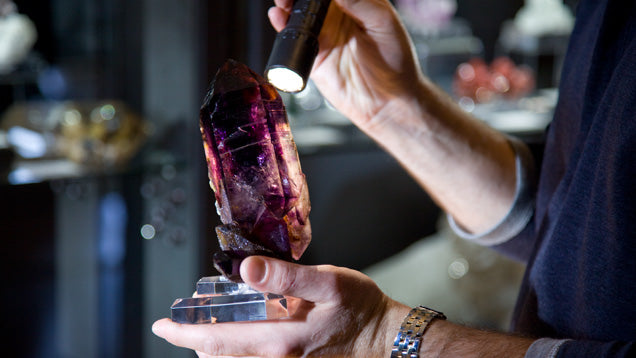
 As legend has it, the god Bacchus was pursuing a maiden named Ametheste, who wanted to stay chaste. She prayed to the chaste goddess Diana, who turned her into a pure, white stone, to always stay chaste. Bacchus, being humbled by her prayer, poured wine over the white stone as an offering, dyeing her purple.
 Amethyst lost its ranking as a cardinal gem in the 18th century when large deposits were found in Brazil, making it more accessible to the general public. Today, amethyst can be found all around the world, with heavy deposits in Brazil, Russia, South Korea, Europe, North America, and the United States.
Today, while you wont usually walk into a jewelry shop and find a pure amethyst wine glass, amethyst has worked its way into many different jewelry styles. Because of its affordability and durability, it makes a great stone to put into many jewelry pieces. Earrings, rings, necklaces, you can find an amethyst piece in any fashion you desire!

Leave a comment